

What Advice Would The Founding Fathers Give On Saving For Retirement?
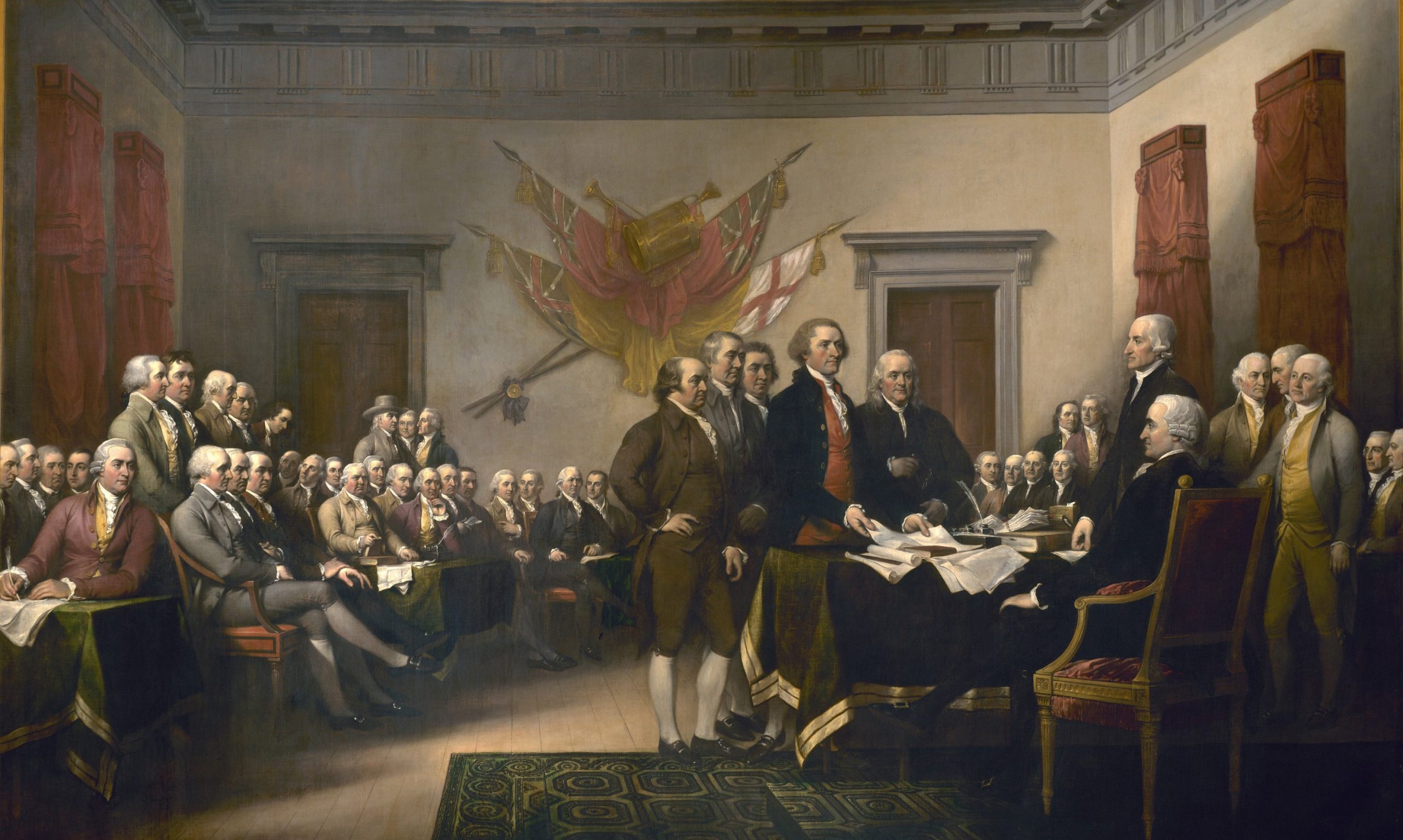
Founding Fathers retirement advice may seem like an impossible concept in an age of 401k plans, target date funds, and ERISA fiduciary committees. America’s Founding Fathers never encountered a 401k plan. They never debated target date funds, automatic enrollment, participant disclosures, or fiduciary liability under ERISA. Yet they confronted many of the same human challenges retirement plan fiduciaries face today: economic uncertainty, financial risk, delayed gratification, and the need to prepare for an unknowable future.
The comparison becomes even more striking when viewed across America’s anniversaries.
In 1776, most Americans lived in an agrarian economy. Retirement, as we understand it, scarcely existed. People worked as long as they were physically able, relying on family, community, personal savings, or property when age limited their ability to earn a living. Average life expectancy was dramatically shorter than today, meaning relatively few Americans spent decades in retirement.
By 1876, industrialization had transformed the economy, but retirement security remained largely a personal responsibility. Pensions existed for some railroad workers, government employees, and military veterans, but most Americans still depended on their own resources.
The contrast between 1976 and today may be the most dramatic of all. At the nation’s bicentennial, traditional defined benefit pensions dominated large employers. Workers generally expected employers to shoulder much of the responsibility for retirement income. In many ways, retirement planning shifted from something employers largely managed to something workers increasingly must manage themselves. Today, more than 100 million Americans participate in defined contribution plans, in which individuals bear much greater responsibility for saving, investing, and managing their retirement assets. Longer lifespans have since transformed retirement from a relatively brief stage of life into a period that can last twenty-five years or more.
The retirement system itself has undergone a revolution. The Congress that oversees retirement policy today would have been unrecognizable to the men who signed the Declaration of Independence. The modern administrative state that now regulates retirement plans emerged gradually over the following centuries, accelerating during the Progressive Era and New Deal. ERISA, enacted in 1974, created a comprehensive fiduciary framework that would have been unimaginable to Franklin, Washington, Jefferson, or Hamilton.
Yet despite all the changes, the central challenge remains familiar: how do individuals sacrifice current consumption to create future financial security?
Unlock Compliance Tools, Growth Secrets, and Summit Access—Just $30/month (or save 10% annually)! What can you do to stay ahead in the coming year? Join Now: https://fiduciarynews.com/join/
Founding Fathers Retirement Advice Begins With Long-Term Thinking
The Founders routinely made decisions whose consequences they would never personally experience. Few examples illustrate that mindset better than Benjamin Franklin’s famous testamentary gifts.
“Actions speak louder than words,” says J. M. (Jack) Towarnicky, Of Counsel at Koehler Fitzgerald, LLC in Powell, Ohio. “Consider Ben Franklin and his commitment to and belief in the future of America and Americans, and the capitalists of his day – independent tradespeople. Ben would encourage fiduciaries to recognize that decisions you make today will influence participants (today and tomorrow), their households and descendants. Ben was an optimist – about America and Americans. His testamentary investment was designed to last for 200 years (beyond America’s bicentennial), to benefit people he had never met, folks he would never meet.
So it is with fiduciaries.
Ben’s gifts are a masterclass in long-term investment planning. He utilized controlled endowments and specific conditions to ensure his wealth promoted education, civic responsibility, and, especially, financial independence for future generations. Franklin’s bequests confirm that actions (designs, defaults, etc.) can serve as legacies which can shape how wealth is stewarded long after the original decision-maker is gone.
Recognize that the recommendations you offer, the decisions you influence, the actions that result, fashion the financial future of participants who, long after you have left the scene, will rely on your expertise – for current and future participants and their households and descendants.”
That perspective aligns closely with ERISA’s emphasis on prudence. Fiduciaries make decisions today that may influence participant outcomes decades into the future.
At the same time, the legal boundaries of fiduciary responsibility remain important.
“It is questionable whether there is a fiduciary duty to encourage retirement savings,” says Marcia S. Wagner, founder of The Wagner Law Group in Boston, Massachusetts. “Certainly, a plan sponsor might believe that is the right thing to do, and perhaps some type of moral obligation, but not a legal obligation. To encourage individuals to act in a particular manner. Assuming that it is a duty, or at least some time or moral obligation, participant education actions to enhance financial literacy, and auto-enrollment would be appropriate strategies.”
The distinction between legal obligation and practical necessity continues to shape retirement plan governance. Even if encouraging savings is not expressly required under ERISA, many fiduciaries view participant readiness as a critical objective.
Another question the Founders might ask is whether retirement plans promote genuine independence or merely channel participants toward predetermined outcomes. The tension between guidance and individual liberty remains as relevant to retirement plans as it was to the architects of the American Republic.
“The Founders would likely tell plan sponsors to make saving easier, but not to let the plan provider control the whole experience,” says Pam Krueger, founder & CEO at Wealthramp in Osterville, Massachusetts. “Give employees access to good education, strong plan design, and give them real options for independent advice. Don’t fall asleep at the switch and wind up letting recordkeepers herd participants only toward their own products. Since it’s all about freedom and liberty, fiduciary duty should include freedom of choice.”
“… A VITAL REFERENCE TOOL FOR YEARS TO COME.”
401(K) FIDUCIARY SOLUTIONS ADDRESSES THE FIVE KEY AREAS OF FIDUCIARY LIABILITY FACING 401K PLAN SPONSORS ON A DAILY BASIS. IN ADDITION, 401(K) FIDUCIARY SOLUTIONS FEATURES SEVERAL CHECKLISTS 401K PLAN SPONSORS CAN USE TO HELP ENSURE THEIR PLAN IS THE BEST IT CAN BE.
WOULD YOU LIKE TO DISCOVER THE COLLECTED WISDOM OF DOZENS OF INDUSTRY EXPERTS AND THOUGHT LEADERS? CLICK HERE AND BUY YOUR COPY OF 401(K) FIDUCIARY SOLUTIONS TODAY!
Retirement readiness requires more than encouraging contributions. Participants must also have confidence that recommendations are being made in their best interests rather than steering them toward proprietary products or advice influenced by conflicts of interest. Fiduciaries who emphasize transparency and participant choice may find themselves following principles the Founders would readily recognize.
“Washington didn’t wait for a warm, sunny day to cross the Delaware; he managed scarce resources with discipline and kept his eye on the distant horizon,” says Mike Cicero, director of portfolio management & research at High Probability Advisors in Pittsford, New York. “That’s precisely what we ask participants to do: forgo consumption today for security down the road. Our fiduciary duty is to make that long horizon visible and compelling, especially for younger employees who can’t yet feel retirement’s urgency.”
Founding Fathers Retirement Advice And Personal Responsibility
No aspect of retirement planning has changed more dramatically than the shift from employer-directed retirement security to participant-directed retirement security.
Towarnicky points to data illustrating how completely the retirement landscape has transformed since America’s bicentennial. In 1975, active participants in defined benefit plans significantly outnumbered active participants in defined contribution plans. Today, the opposite is true, with defined contribution plans serving more than 100 million active participants while traditional pensions continue their long decline.
That shift raises an interesting question. Would the Founders have embraced modern plan features such as automatic enrollment and automatic escalation?
The answer depends on which Founding principle receives the greatest emphasis.
“Perhaps my favorite Franklin quote is, ‘An investment in knowledge pays the best interest,’” says Terry Morgan, president of OK 401k in Oklahoma City, Oklahoma. “This is one reason I’ve spent the past 27 years traveling across Oklahoma conducting employee education meetings. Most employees genuinely want to retire comfortably, but many have never been taught the basics of investing, diversification, or how much they should be saving. I know, I was trained as a teacher. Financial education remains one of the best investments an employer can make in its workforce. Make sure your employees get on-site investment education from a fiduciary advisor.”
The debate becomes more nuanced when behavioral finance enters the discussion.
“The use of tools such as automatic enrollment and auto escalation may be inconsistent with personal responsibility, because they rely on the behavioral economics insight into inertia,” says Wagner. “These are valuable tools, but the Founding Fathers might have preferred some alternative approach to encourage participant savings. Because the Founding Fathers recognized the importance of balance, such as a government structure based upon separation of powers and checks and balances, they would also take account what a participant must forego to enhance savings. Reducing snacks would be an appropriate action; foregoing medical appointments for participants living paycheck to paycheck, providing financial assistance to elderly parents, would not.”
Others see automatic features as supporting rather than undermining self-sufficiency.
“Jefferson envisioned citizens capable of governing themselves precisely because they were economically independent,” says Cicero. “Auto-enrollment doesn’t contradict that vision; it honors it. We’re not removing choice; we’re correcting for the well-documented human bias toward inertia. The choice is still available to end contributions at any time, but auto features help to foster self-sufficiency in retirement.”
Boost your ERISA practice with Professional Membership! Unlock advanced visibility, efficiency tools, and Archival access for just $60/month. How can these tools help you grow smarter? Sign Up Today: https://fiduciarynews.com/join/
Founding Fathers Retirement Advice On Risk, Uncertainty, And Prudence
Economic uncertainty was hardly invented by modern markets. The Founders lived through war, inflation, debt crises, fragile institutions, and uncertain economic conditions.
Today’s fiduciaries face a different set of uncertainties. National debt exceeds $39 trillion. Many state and local government retirement systems remain underfunded. The financial promises embedded throughout the retirement system continue to raise questions about who ultimately bears the risk when assumptions fail. Multiemployer pension plans required substantial federal assistance despite concerns that had been identified decades earlier. Participants face longer life expectancies, healthcare costs, market volatility, and the possibility of outliving their savings.
Yet uncertainty itself may not be the enemy.
“The most prominent signature on the Declaration, one of only two who signed on July 2nd, is John Hancock, perhaps the wealthiest American of his day,” observes Towarnicky. “Economic uncertainty is a feature of America’s capitalist system, not a bug. Uncertainty does cause financial pain for individuals. However, uncertainty serves as the ultimate engine of adaptability, capital reallocation, and systemic evolution for American capitalism. Consider Joseph Schumpeter’s concept of creative destruction. Downturns force obsolete businesses to fail, clearing capital, talent, and market share for more efficient and innovative companies to emerge. During uncertain times, capital flees failing, stagnant, or bloated industries. It is then reallocated toward new, high-growth sectors (like artificial intelligence) that promise better long-term returns.”
Prudent fiduciary processes must account for those realities while maintaining appropriate risk controls.
Ron Surz, president of Target Date Solutions in Sacramento, California, says, “Target date fund glidepaths are designed to manage risk, but NOT to market time. Investments along the path remain the same regardless of market conditions, importantly like those we currently have. But academic lifetime risk management theory is actually not being followed, and current market conditions argue for less risk. TDFs say they follow academic lifetime investing theory, but that theory – for risk management – is 70% risk-free near retirement. The king of TDFs –Vanguard – is currently recommending 70/30 bonds/stocks while its TDF remains 50/35/15 stocks/bonds/cash for those near retirement. The DOL is silent on these issues, recommending instead that TDF glidepaths be chosen to match workforce demographics – a lofty objective for off-the-shelf products.”
Retirement readiness involves more than accumulating assets. It also requires helping participants understand how to use those assets during retirement.
“Solely as an economic matter, the decumulation of retirement savings is a complex matter, and plan sponsors need to be cognizant of the potential downside in delayed gratification as an enhancement of retirement savings,” says Wagner. “The issue is that a delayed gratification mindset that was appropriate while an active plan participant will persist into the decumulation stage, with participants, concerned about Social Security cutbacks and outliving their savings, will underspend in retirement, essentially affecting their quality of life in retirement. Although several of the Founding Fathers had lengthy life expectancies, the downside of delayed gratification would likely not have been apparent to them.”
Ultimately, the Founders might recognize little about today’s retirement system beyond its underlying purpose. They would not recognize ERISA. They would not recognize target date funds. They would not recognize participant disclosures measured in hundreds of pages.
Over the past 250 years, America has evolved from an agrarian society with little concept of retirement into a nation with more than $50 trillion in retirement assets and a regulatory framework that would have been unimaginable in 1776. Yet the central challenge remains remarkably familiar.
Prudence, discipline, personal responsibility, and long-term thinking helped build a nation amid uncertainty.
The retirement system has changed. Human nature has not.
What do you think? Join us every Wednesday at noon (Eastern Time) for our Thought Leader Roundtable discussion. Not sure if you’re on the email invite list? Click here to be added to the list
Christopher Carosa is an award-winning online news producer and journalist. A dynamic speaker, he’s the author of 401(k) Fiduciary Solutions, Hey! What’s My Number? How to Improve the Odds You Will Retire in Comfort, From Cradle to Retirement: The Child IRA, and several other books on innovative retirement solutions, practical business tips, and the history of the wonderful Western New York region. Follow him on X, Facebook, and LinkedIn.
Mr. Carosa is available for keynote speaking engagements, especially in venues located in the Northeast, Mid-Atlantic, and Midwestern regions of the United States and in the Toronto region of Canada.


There are no comments at the moment, do you want to add one?
Write a comment